Why I Grab My Cushion at 8 a.m.
Lars Lutje Schipholt
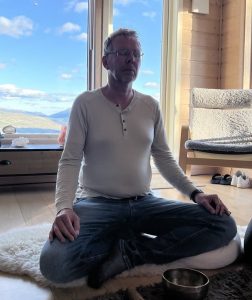
I’m sitting with my eyes closed, bringing my attention to my body. It goes quiet. At first, it feels good. But then something comes to mind and won’t let go. I want to do something. The urge to act is immediate. Say something, ask something, figure something out — anything but this.
I notice that urge. And realize: I don’t have to follow it. Sound familiar?
Maybe you already meditate and wonder if you’re doing it right. Maybe you want to start, but don’t know where. Maybe you’ve tried and dropped it quickly. Or you’re simply wondering what it actually gives you.
What meditation really does, why it’s so hard to keep up, and why I still sit down for it every morning after all these years…
What silence makes visible
I use a short, guided meditation at the start of many sessions. To stop talking for a moment and notice what’s already moving beneath the surface. What stays hidden behind a full story, the body will sometimes reveal in half a minute of stillness. A breath that doesn’t quite flow. Tense face. The urge to speak the moment it gets quiet. Small signals. Rarely coincidental.
Meditation works the same way, but for yourself. You’re training something hard to learn while you’re always in motion: noticing without immediately doing something with it, not pushing the feeling away, not getting lost in it, but observing it and staying with it briefly. That sounds promising. But there’s a reason most people stop before they reach this point.
Every beginning is hard
Many people try meditating and drop it quickly. Not because it does nothing, but because it does too little in the first weeks. We’re used to direct feedback: you do something, you notice an effect. Meditation works differently. The effect is subtle, delayed, and hard to measure. And if you set the bar too high, you create your own resistance. Start small. Five minutes for a week. Then ten.
I compare it to brushing your teeth. You don’t brush for the immediate pleasure. It’s a habit, and it starts to feel wrong to begin your day without having done it. Meditation works the same way. You have to invest in it to make it a habit. And then you start to miss it when you don’t. I notice it myself: more restlessness, quicker to react.
For me, meditation works after months, not days. At first, it feels like practicing without results. Then, at some point, you notice the space between what happens and how you react has become a fraction wider. You notice it in daily life: that you see a moment earlier when you’re about to attack, withdraw, explain, or check out. And that in that moment, you sometimes still have another choice.
A fraction of a second. But right there, in that small space, something begins to change. And what changes have taken on an image for me.
Being the mountain, not reaching the summit
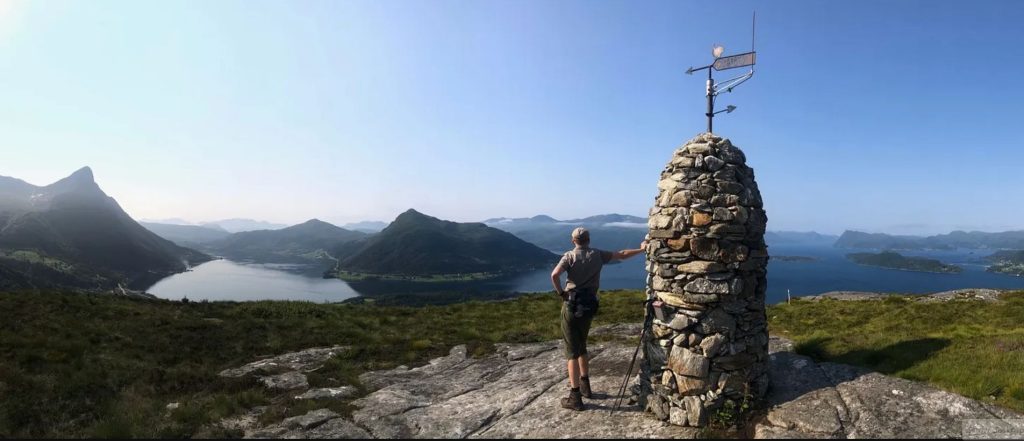
In meditation, you practice it: you sit like a mountain. Thoughts, feelings, distractions come and go, like the weather passing over a ridge. You are not the weather. You are the mountain. Rooted in the earth, steady at the core, while everything moves around you.
… and then something shifts. Things click into place. What was unclear suddenly becomes clear. The tension … dissolves, sometimes surprisingly fast. Not because something was solved, but because people are briefly no longer in their story, but in themselves.
What I experience when I’m truly in my mountain: stillness, clarity, the sense that nothing needs to happen. A connectedness with something larger, nature, the moment, life itself. And a deep humility: less of myself at the center, more part of a larger whole. Like an ant doing its work without wondering whether it matters enough. That feels completely right to me in those moments.
Presence doesn’t mean nothing moves. It means you’re not swept away by every movement.
Join Lars and other hosts on the European Virtual Zendo at 8:00 a.m. (CET) Monday through Friday for daily meditation and teachings.
Or join the North American Virtual Zendo Sundays through Fridays.